
- In short
- What is the role of a care aide?
- What is the difference between a care aide, a nurse and a beneficiary attendant?
- Why care aides are essential to aging at home
- What care can a care aide provide at home?
- How to make the home safer to support care aides’ work
- Why the Sécur-O-Bain chair supports aging at home
- FAQ
- Get a quote
Summary
- In short
- What is the role of a care aide?
- What is the difference between a care aide, a nurse and a beneficiary attendant?
- Why care aides are essential to aging at home
- What care can a care aide provide at home?
- How to make the home safer to support care aides’ work
- Why the Sécur-O-Bain chair supports aging at home
- FAQ
- Get a quote
When a loved one loses autonomy, we hear about care aides, beneficiary attendants and nurses, without always knowing who does what. Understanding the role of a care aide helps you make the right choices for home support.
In short
The role of a care aide is to support seniors day to day with hygiene, meals, mobility and monitoring. In Quebec, this role often goes by beneficiary attendant. This article clarifies the differences between providers, details in-home care and shows how a safe home makes their work easier.
What is the role of a care aide?
The role of a health care aide is to provide a presence and hands-on assistance to help the person maintain their health. In Quebec, the common titles are beneficiary attendant (PAB) or health and social services assistant.
Daily care and services
They assist with activities of daily living, like getting up, washing, getting dressed and eating. They monitor medication intake and flag any changes.
Supporting older adults
Beyond technique, this role rests on the human bond: a reassuring presence and respect for pace matter as much as care.
Fostering autonomy and hygiene
Rather than doing everything for the person, they encourage what the person can still do independently. Bathing help is safer in a well-equipped environment.
What is the difference between a care aide, a nurse and a beneficiary attendant?
These jobs may look similar, but their responsibilities differ.
Responsibilities for each profession
The beneficiary attendant delivers basic care. The licensed practical nurse administers medication and treats wounds. The registered nurse assesses health status and coordinates the care plan.
Care authorized by role
A beneficiary attendant does not diagnose. A licensed practical nurse holds a DEP and a permit from the Order. a registered nurse has college or university training.
In-home interventions
At home, the beneficiary attendant provides daily assistance, while a nurse steps in for more complex care.
| Provider | Training | Main tasks |
|---|---|---|
| Beneficiary attendant | AEP or DEP (5 months to 1 year) | Hygiene, meals, mobility, monitoring |
| Licensed practical nurse | DEP in health and practical nursing | Wound care, medication, observation |
| Registered nurse | DEC or bachelor’s degree | Assessment, diagnosis, care plan |
Information drawn from Quebec government job profiles, subject to updates.
Why care aides are essential to aging at home
Without regular human presence, many seniors simply could not remain at home. That is where they step in. The role of a care aide becomes central as the population ages.
Quebec’s aging population
The proportion of older adults is rising quickly. The government even launched accelerated training for beneficiary attendants to address shortages.
The importance of in-home support
Without this assistance, many seniors would have to leave home sooner. Health care aides make aging at home possible.
Growing needs among families
Caregivers cannot do everything, especially when it comes to bathing. A qualified provider lightens their load.
What care can a care aide provide at home?
The role of a care aide at home ranges from bathing help to simply keeping an eye on overall health, especially when an older adult begins to experience a loss of autonomy. Here are the main daily tasks.
Help with hygiene and mobility
Bathing, dressing and transfers, for example, from bed to wheelchair, are part of the daily routine. These moves require safe technique to protect both the senior and the provider. The bathroom remains the riskiest place, though good equipment can change everything.
Day-to-day support
Beyond body care, the care aide prepares meals, reminds the senior about medication intake and accompanies them to appointments. They also offer valuable moral support, often the first social contact of the day for an isolated senior.
Help with mobility and safety
They ensure a clutter-free environment and use adapted equipment, grab bars or a bath chair, to prevent falls during movements. A well-arranged home makes work safer and more efficient, especially when families also learn about 2026 grants to adapt home equipment.
Monitoring general condition
By spending time with the person, the care aide notices what a busy relative might miss: reduced appetite, low mood, diminished mobility. They flag these changes quickly, which often allows intervention before a problem worsens.
How to make the home safer to support care aides’ work
The safer the environment, the less a care aide must improvise or strain in risky conditions. The bathroom is where these adaptations matter most.
Fall risks in the bathroom
Wet floors, tight spaces and delicate transfers make the bathroom the riskiest place for bathing help.
Recommended equipment for older adults
Grab bars, non-slip mats, good lighting and a bath seat form the basis of a safe environment and help prevent falls in the bathroom.
The importance of a safe bath chair
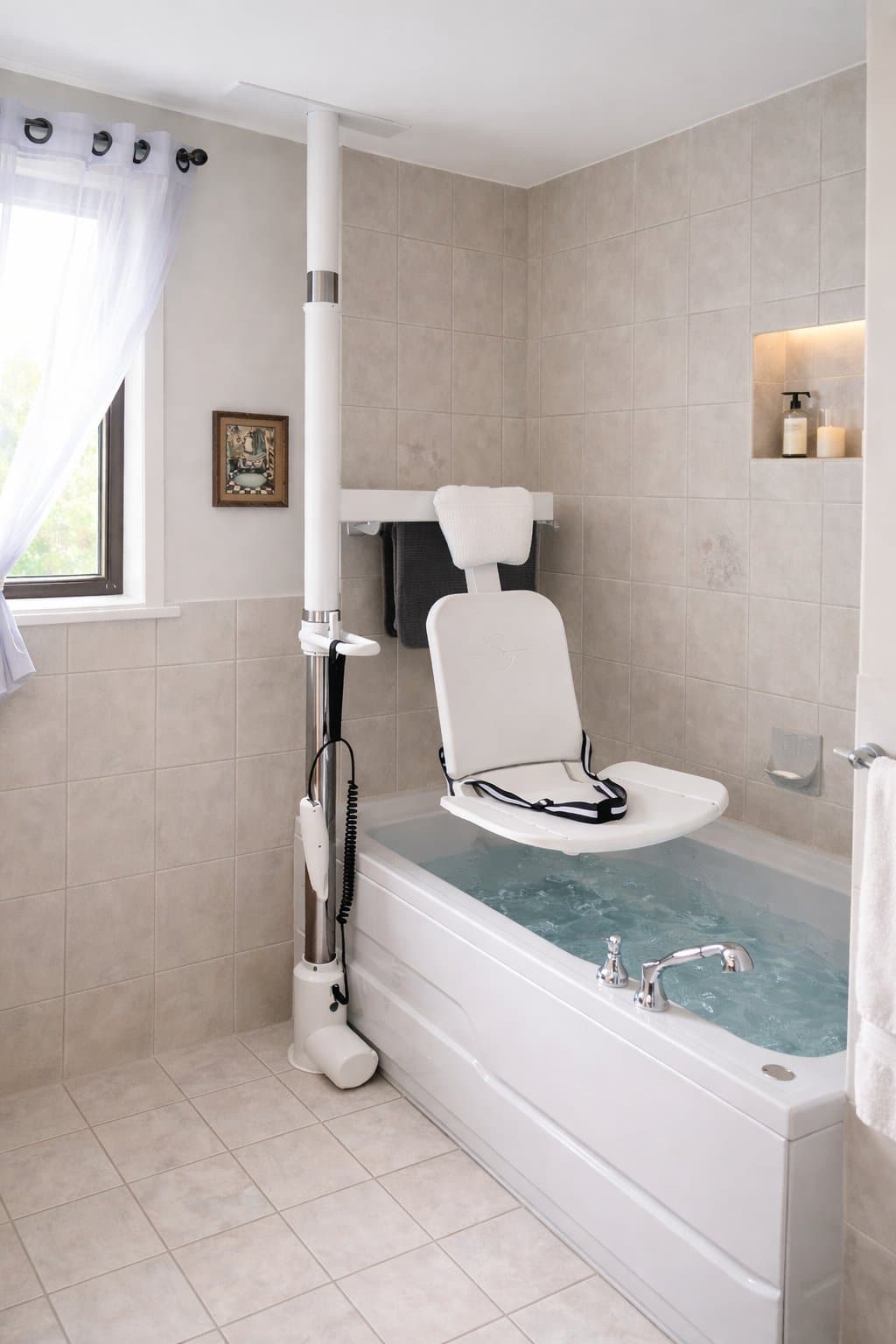
A suitable bath chair allows you to assist washing without lifting the person over the rim, reducing the risk of injury for both parties.
| Equipment | Contribution to aging at home |
|---|---|
| Grab bars | Solid handhold to stand up |
| Non-slip mat | Reduces slipping on wet floors |
| Adapted bath chair | Helps avoid stepping over the tub, facilitates assistance |
Indicative comparison of equipment that supports home safety.

Why the Sécur-O-Bain chair supports aging at home
The Sécur-O-Bain chair addresses the most urgent need: entering and exiting the bath. Its benefits are felt in four ways described below.
Reduce risks during bathing
It removes the need to step over the rim, the most unstable movement in bathing.
Enable safer movements
You sit and pivot into the tub with a controlled motion that protects balance.
Improve comfort for seniors and caregivers
The care aide works without lifting, and the older adult keeps more privacy.
Delay the need for a specialized residence
By making bathing assistance sustainable over time, it helps prolong aging at home.
FAQ
What is the role of a care aide?
Support the person with daily activities, monitor general condition and provide a reassuring presence.
Can a care aide work in a home setting?
Yes, through the CLSC or in-home service companies.
What is the difference between a care aide and a beneficiary attendant?
In Quebec, both essentially refer to the same basic care role: the official title is beneficiary attendant.
What care can be provided at home for an older adult?
Help with bathing and transfers, meals, medication reminders, accompaniment and monitoring.
Which equipment supports aging at home?
Grab bars, non-slip surfaces and a bath chair such as the Sécur-O-Bain can provide an advantage for ages 65 and over by making bathing safer and more accessible day to day.