
Seeing a parent age raises a legitimate concern: can they remain safely at home? The good news is many simple steps help an aging parent stay independent without upending their life.
In short
To help an aging parent remain independent, spot early signs of declining autonomy, secure the house and offer support without doing it all for them. Safely aging at home for an older adult mainly relies on fall prevention, especially in the bathroom. Here are concrete tips and simple equipment.
Why are more seniors choosing to remain at home?
Growing old at home is not only about comfort. It is often a choice deeply tied to identity and feeling in control. Three reasons come up most often to explain this choice.
The comfort of daily habits
Home means a neighbourhood, neighbours and landmarks built over decades. Keeping this setting soothes daily life.
Maintaining independence
Choosing your schedule and activities helps you maintain a sense of control, which builds confidence.
The psychological impact of moving
Leaving home can cause anxiety and disorientation. Delaying this change, when safe, protects morale.
What are the first signs of declining autonomy to watch for?
Signals usually appear slowly. Spotting them early lets you act before an accident happens.
Mobility difficulties
Hesitation on stairs, leaning on furniture and a slower gait serve as warnings for the risk of a fall.
Forgetfulness and changes in routine
Missed medications, piled-up mail or skipped meals can signal that loss of autonomy is affecting everyday life.
Higher fall risks at home
Slippery rugs, poor lighting and a hard-to-access bathtub become dangerous as balance declines.
| Signs of declining autonomy | What it may indicate |
|---|---|
| Unsteady gait | Fall risk, muscle weakness |
| Frequent forgetfulness | Medication management to monitor |
| Neglected hygiene | Difficulty washing safely alone |
| Isolation | Lower morale, need for support |
Indicative list. A health professional can properly assess autonomy.
How to secure a parent’s home
Securing a home does not mean transforming it completely. A few targeted, low-cost steps often suffice to significantly reduce the risk of accidents.
The most dangerous rooms for older adults
The bathroom and stairs come first, followed by the kitchen.
The importance of a clutter-free environment
Clearing hallways, removing slippery rugs and adding lighting reduce risks at a low cost.
Equipment that improves day-to-day safety
Grab bars, motion sensors, shower seats and large-button phones make a real difference to help an aging parent stay independent. Depending on the situation, some adaptations can also be an advantage for ages 65 and over, especially when they make it possible to secure the home without forcing the person to move.
Why the bathroom remains the riskiest for a fall
Among all rooms at home, the bathroom worries occupational therapists the most. Several factors combine to make it particularly dangerous.
Slippery surfaces and difficult movements
Water, soap and tiles create a treacherous floor where a small imbalance can cause a serious fall. That is why preventing a fall in a bathroom often becomes a priority when securing a parent’s home.
Challenges with the bath and shower
Stepping over a bathtub to get in requires balance that many older adults no longer have.
Recommended equipment to prevent accidents
According to the Government of Quebec, prevention includes grab bars, slip-resistant surfaces and a stable seat in the bath. Families can also look into 2026 grants to better plan a safe bathroom adaptation.
How our safe bath chair helps preserve autonomy
Among possible solutions, a bath chair targets the riskiest movement in their hygiene routine. Here is what it changes in practice for both the parent and loved ones.

Reduce slipping hazards
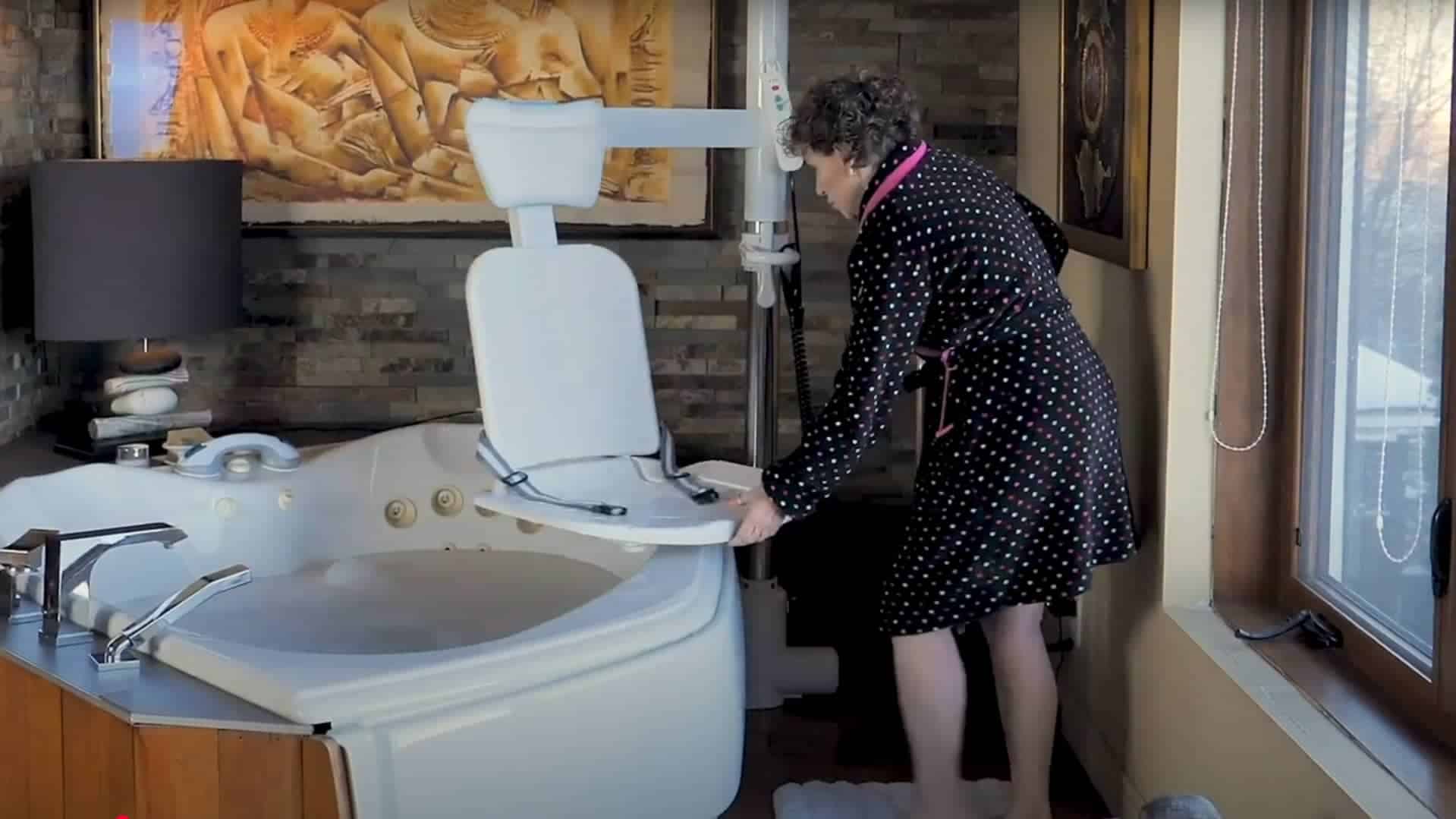
The Sécur-O-Bain chair lets you sit and pivot instead of stepping over the rim.
Make daily hygiene easier
The parent washes while seated and safe, which makes it possible to help them wash without taking away independence. This solution encourages partial autonomy and supports aging at home.
Reassure caregivers
Knowing the bath is safe removes constant worry and eases caregivers’ mental load. When needs become more regular, learning more about support from a health care aide can also help the family choose the right levels of assistance.
| Home adaptation | Senior’s residence |
|---|---|
| Targeted, one-time cost | Recurring high monthly cost |
| Same living environment | Complete change of setting |
| Preserved autonomy | Structured care, but loss of familiar cues |
Indicative comparison between adapting the home and residence living.
FAQ
How do you help an aging parent stay independent at home?
By spotting early signs of declining autonomy, securing risky rooms and using in-home services.
What are the signs of declining autonomy in an older adult?
Unsteady gait, frequent forgetfulness, neglected hygiene, skipped meals and social isolation.
How do you prevent falls at home for seniors?
By removing obstacles, improving lighting and installing grab bars and a safe bath seat.
Which equipment secures a bathroom for an older adult?
Grab bars, non-slip mats and a suitable bath chair such as the Sécur-O-Bain.
When should you consider a senior’s residence?
When care needs exceed what can be offered safely at home despite adaptations.