
Summary
Summary
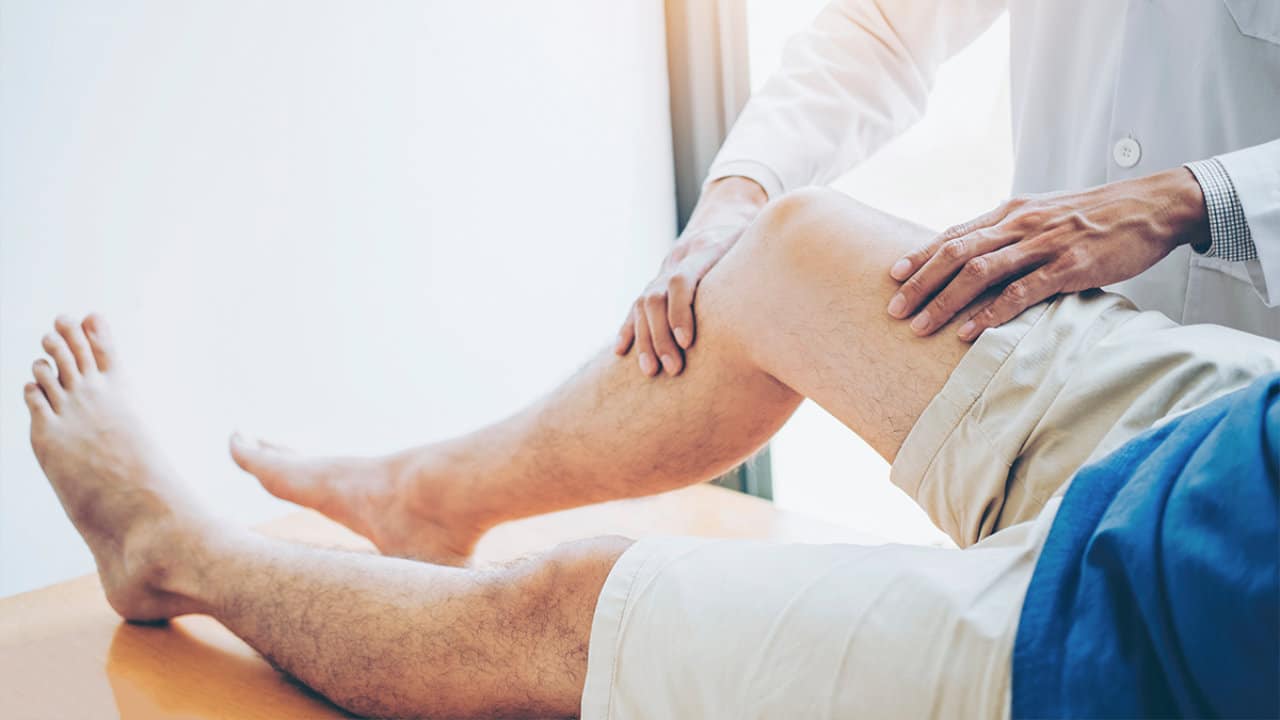
Difficulty lifting a leg to step into a bathtub is often caused by osteoarthritis, muscle weakness, lower back pain, or the aftermath of surgery. This movement increases the risk of falling, especially for older adults or anyone with reduced mobility. Grab bars and transfer benches can help, but a bath lift chair is the only option that completely removes stepping over the tub and enables safe access to the bath.
Why does lifting a leg become difficult?
Clearing the edge of a bathtub calls for strength, flexibility, and balance at the same time.
The muscles engaged in stepping over a bathtub
The movement uses the hip flexors at the front of the joint and the quadriceps at the front of the thigh. Meanwhile, the leg that stays on the floor carries your entire weight. Difficulty lifting a leg shows up as soon as any one of these supports weakens.
Why this movement gets harder with age
The body gradually loses muscle mass and strength. This is sarcopenia. It begins as early as your fifties and affects one in five people after age 70, then one in two after 80. It largely explains falls and daily actions that become demanding, including leg muscle weakness.
When should you be concerned?
Difficulty lifting a leg that develops over months deserves a medical evaluation, without urgency. On the other hand, sudden weakness or numbness on one side of the body is a sign of stroke. Call 911 immediately. Loss of bladder or bowel control with back pain also requires urgent care.
What are the most common causes?
Osteoarthritis of the hip or knee
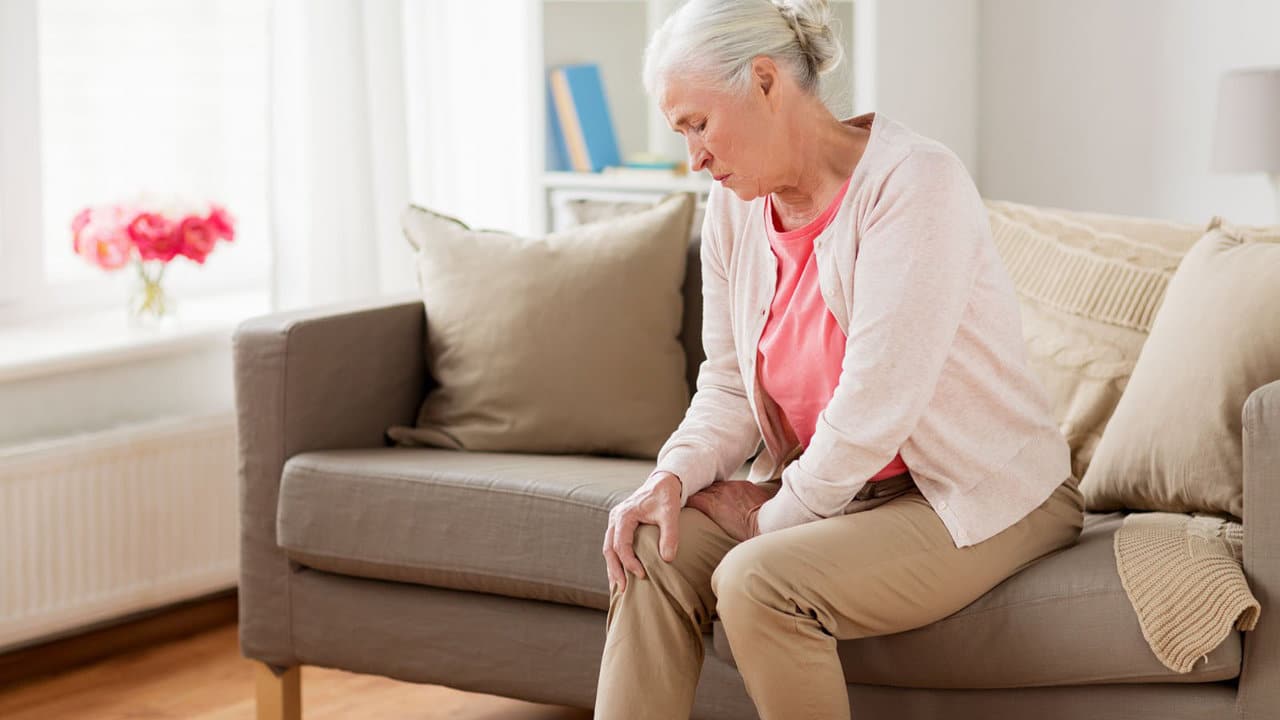
Osteoarthritis is the third most common chronic condition among Canadians aged 65 and over. Knee osteoarthritis, for example, makes walking, rising from a chair, and climbing stairs more difficult.
As for hip osteoarthritis, walking, getting out of a car, and putting on shoes become challenging. These are exactly the movements required to step over a bathtub edge.
Lower back pain or sciatica
When a nerve root in the lower back is compressed, pain leaves the spine and travels into the buttocks and leg. It may come with a loss of strength or sensation that makes the leg less reliable when you try to raise it.
Muscle weakness and loss of mobility
Sarcopenia reduces both muscle mass and strength. This leg muscle weakness leads to trouble lifting the leg high enough to clear a rim. The less you move, the more strength declines, and the riskier the move becomes.
After surgery or an injury
In 2021 to 2022, more than 117,000 hip and knee replacements were performed in Canada, with osteoarthritis as the main cause. After surgery, some hip movements remain limited, sometimes for a long time.
Neurological disorders and balance problems
A stroke can leave one-sided weakness and loss of coordination. Other nervous system conditions reduce sensation in the feet and throw off balance. Maintaining a healthy lifestyle and doing exercises that train movement control help improve balance and reduce the risk of falling.
| Cause | Associated symptoms |
|---|---|
| Knee osteoarthritis | Pain when walking, difficulty getting up from a chair and climbing stairs |
| Hip osteoarthritis | Pain when walking, difficulty putting on shoes or getting out of a car |
| Low back pain or sciatica | Pain that travels into the buttock and leg, numbness |
| Sarcopenia | Loss of strength, quick fatigue, daily tasks become demanding |
| After surgery or an injury | Reduced range of motion, painful weight bearing |
| Neurological disorders | Weakness on one side of the body, loss of coordination and balance |
Why does the bathtub become an obstacle?
The step-over movement: a challenge for many people
Getting into a bathtub requires clearing a high rim while you balance on one leg. You must bend the hip and knee, lift the foot high enough, then hold the position long enough to pass. Pain, muscle weakness, and chronic pain, in general, can limit each of these three actions.
As a result, difficulty getting into a bathtub often appears before other day-to-day limitations.
The risk of losing balance on one leg
During the step-over, your full weight rests on a single foot, on a wet surface, without a solid handhold within reach. The slightest hesitation can turn into a fall. When mobility is reduced, this risk rises considerably.
Why falls often happen in the bathroom
One third of the one million Quebec seniors living at home fall each year. Among people aged 60 and over, the bathroom is the second most common indoor location for falls, after the bedroom. Sécur-O-Bain addresses this exact moment with a bath lift that makes entering and exiting the bathtub safe.
Which solutions make it easier to access the bath?
Good habits before getting into the bath
Run the water before you get in and check temperature. Place your towel, soap, and clothing within easy reach. Never rush. Hurrying causes more falls than fatigue.
Grab bars and non-slip surfaces
Grab bars installed near the tub, shower, and toilet reduce the risk of falling. A non-slip mat on the tub floor and lever-style faucets complete the setup.
Transfer benches and bath boards
A board placed across the rim or a bench at the entry lets you sit before moving your legs. The effort decreases, but you still need to lift each leg over the rim.
Aids recommended by occupational therapists
An occupational therapist evaluates your bathroom and first aims to eliminate the risky action rather than help you perform it. Only one solution removes the step-over entirely. A bath lift chair, like the one from Sécur-O-Bain, carries you over the rim of the tub while you remain seated.
| Assistive device | What it solves | Limit |
|---|---|---|
| Grab bar | Provides a stable handhold | You still have to step over |
| Non-slip mat | Reduces the chance of slipping | No support for the movement |
| Bath board | Lets you sit first | Legs still have to clear the rim |
| Transfer bench | Eases the seated transfer | Bulky, higher seated position in the tub |
| Shower seat | Lets you wash while seated | Replaces the bath. Does not make it accessible |
| Bath lift chair | Eliminates the step-over and lowers you into the water without effort | Installation required, yet usually quick and without major work |
How does the Sécur-O-Bain chair make bathtub access easier?
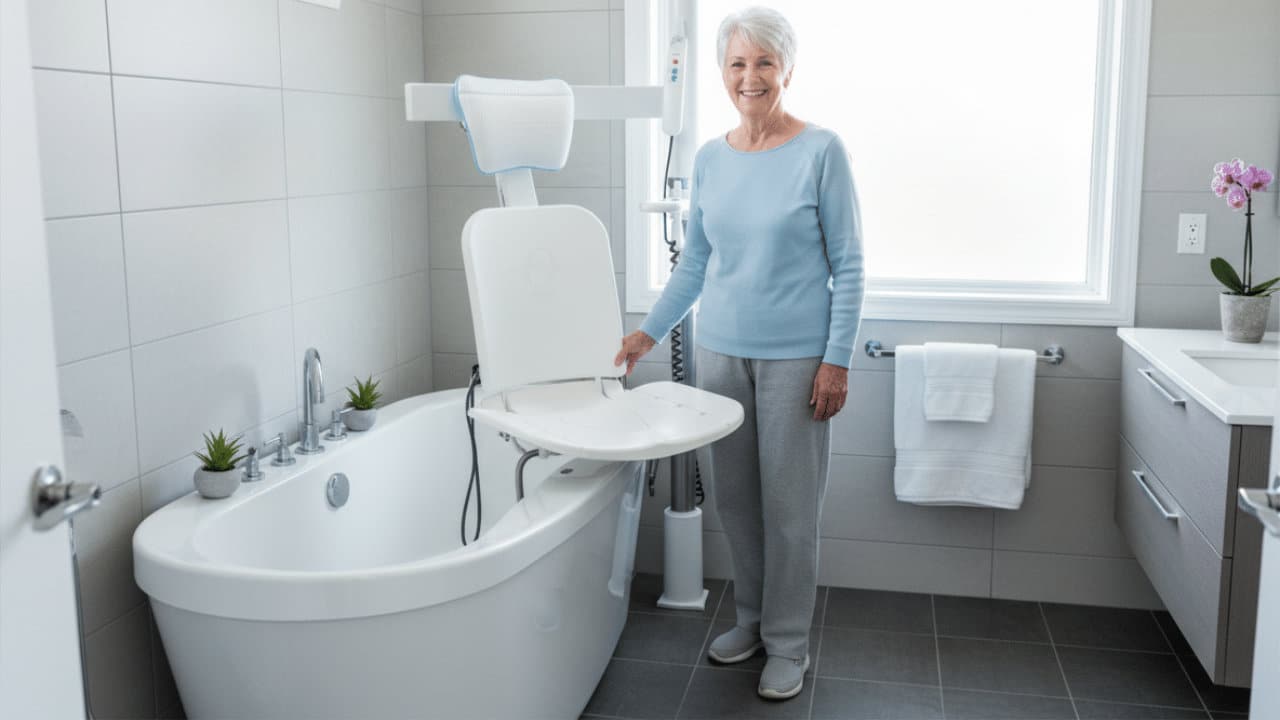
Reduce the effort needed to enter and exit the bath
A bath lift, like the one offered by Sécur-O-Bain, removes the riskiest move and lets you glide into and out of the bathtub safely. You sit down and the device lowers you into the water, then raises you back up. No effort is placed on your legs or your arms. The support bar, headrest, and belt keep you positioned throughout the trip.
Limit painful hip and knee movements
The chair prevents you from bending the hip and knee beyond what pain permits. It also resolves trouble lifting the leg and the arm-powered push to rise, the two moments when osteoarthritis is felt the most.
Maintain independence longer
Bath time becomes something you do on your own, when you want. It also provides warmth to relax muscles, which you can now do without having to ask for help.
A solution appreciated by caregivers and occupational therapists
The device also helps caregivers by removing the need to lift, which is risky for their back and for the person being helped. Occupational therapists view it as an aid that eliminates the dangerous movement instead of assisting it, which matches their in-home intervention approach.
| Stage of the bath | Traditional entry | With the Sécur-O-Bain chair |
|---|---|---|
| Before getting in | Decide whether the move is possible today | Sit down, without hesitation |
| Clear the wall | Balance on one leg, foot raised high | Seated passage, legs at rest |
| Lower into the water | Bend the knees and let yourself descend | Motorized, controlled descent |
| Rise up | Push on arms and knees | Motorized lift |
| Exit | Second step-over, body wet | Seated exit, at the same level |
| After | Help from a loved one often needed | Bath taken alone |
FAQ
Why do I have trouble lifting a leg?
Most often because of osteoarthritis of the hip or knee, lower back pain, or age-related loss of muscle strength.
Why is it difficult to get into a bathtub with osteoarthritis?
Stepping over requires bending the hip and knee beyond what the joint can tolerate. These are precisely the movements that osteoarthritis limits.
How can I get into a bath if I can no longer lift my leg?
By passing over the wall while seated, without lifting the leg. A bath lift chair makes this transfer possible on your own.
Which equipment makes bathtub access easier?
Grab bars, a non-slip mat, a bath board, or a transfer bench. None remove the step-over, unlike the Sécur-O-Bain bath lift chair.
Which solution lets me keep taking a bath safely?
A bath lift chair is the only aid that completely removes stepping over the rim. Sécur-O-Bain lets you keep bathing on your own, at home, without help and without pain.