
Summary
Summary
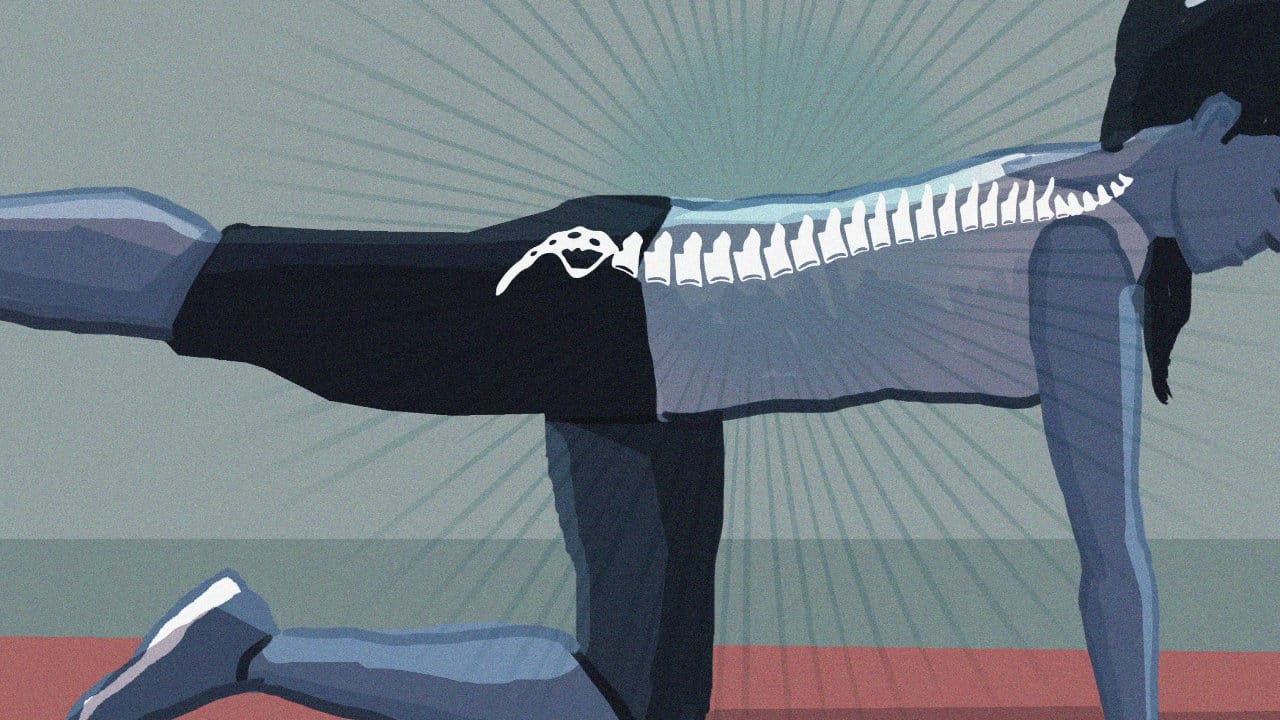
Lower back pain sits between the last ribs and the pelvis, in the lumbar region, and it can become disabling. This back pain may come from muscles and ligaments, an intervertebral disc, osteoarthritis, or osteoporosis. It affects people who are active as well as older adults.
This article explains the causes of lumbar pain, the symptoms that require a medical consult, and recognized treatments. We also outline daily tasks that become difficult, such as getting in and out of the bath, along with home adaptations that help you maintain independence safely for as long as possible.
What is lower back pain (lumbalgia)?
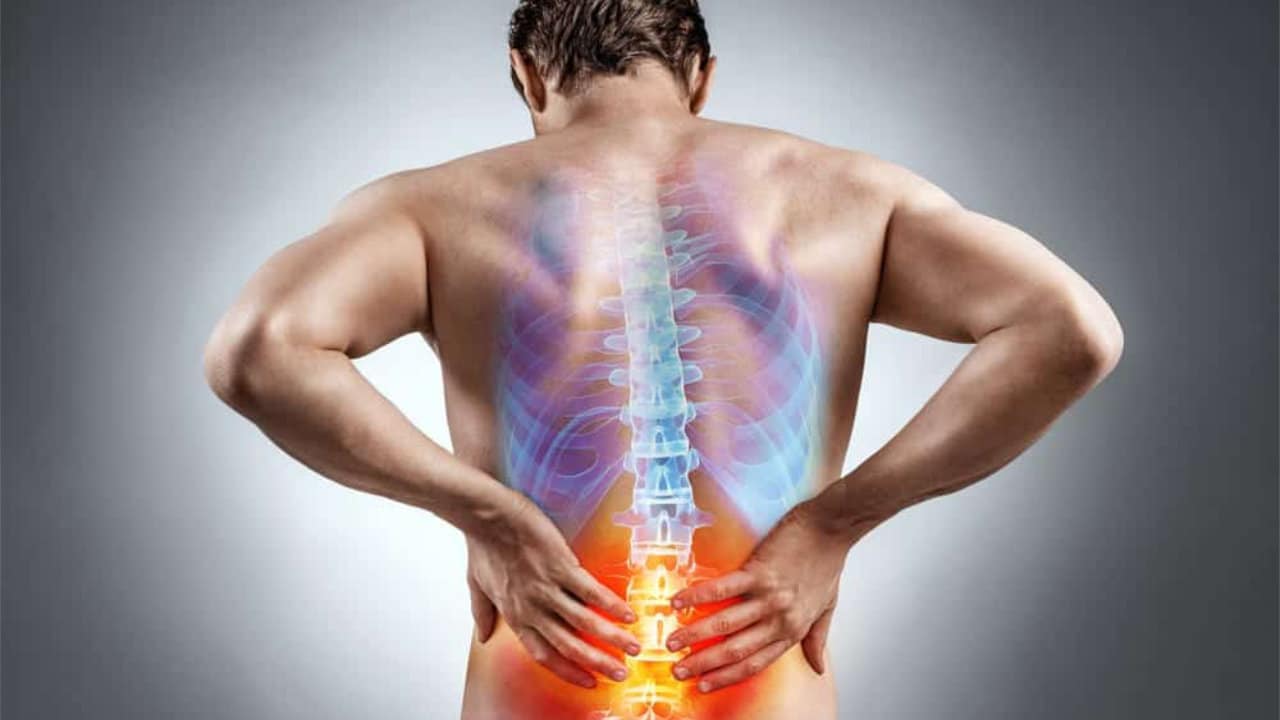
Lumbalgia is the medical term for lower back pain, the most common form of backache. It is located between the bottom ribs and the top of the pelvis, in the part of the spine that supports the weight of the torso.
The different forms of lumbalgia
Lumbalgia is classified by duration. Sudden lower back pain that eases within a few days or weeks is the acute form, often called lumbago. When the pain sets in and keeps coming back without fully disappearing, it is called chronic lumbalgia.
Why is the lower back so often affected?
The lumbar area carries the weight of the upper body and is involved in almost every movement: bending, standing back up, lifting a load, turning. This constant demand explains why lower back pain, also called lumbar pain, appears so easily.
People at higher risk
Lumbalgia or lumbago spares neither active adults nor seniors. Jobs that require physical effort or long static postures, a sedentary lifestyle, and excess weight raise the risk. With age, osteoarthritis and osteoporosis weaken the spine and make episodes more frequent.
What are the main causes of lower back pain?
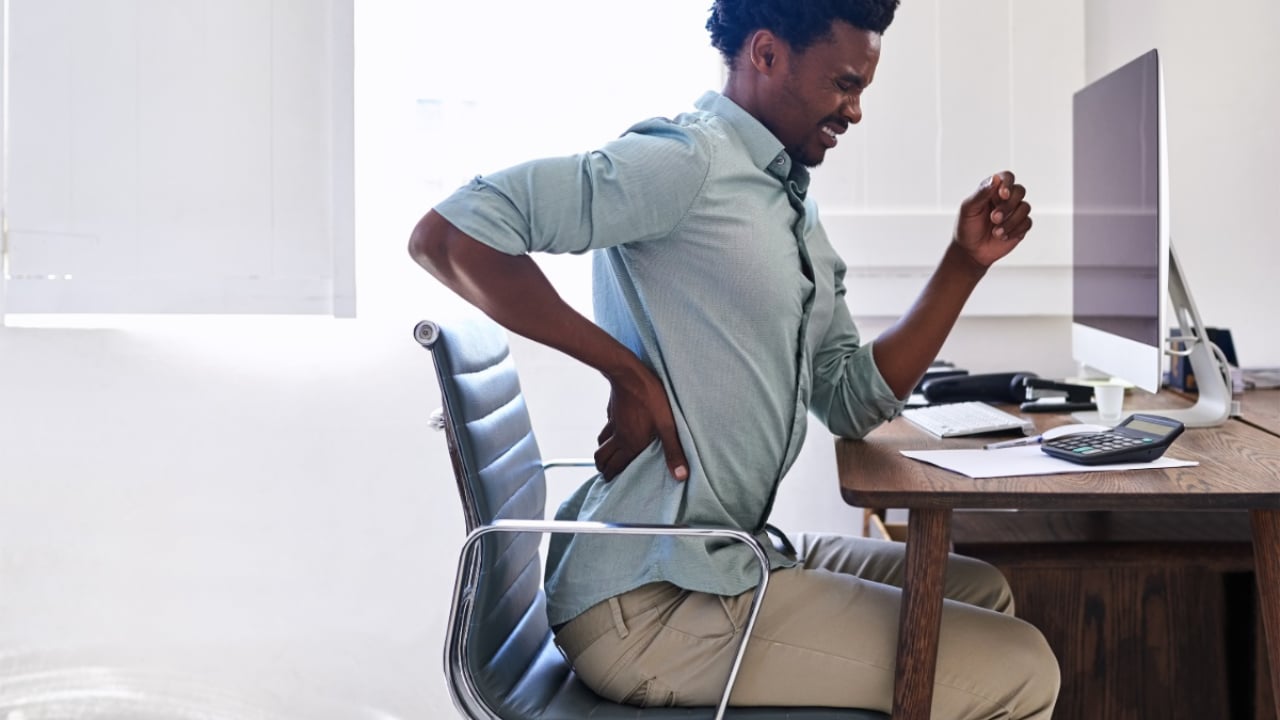
Lower back pain rarely has a single cause. It often results from a specific movement, a vulnerable structure, or lifestyle habits that add up over time.
Awkward movements and physical effort
Lifting a load with a rounded back, standing up while twisting, or holding an object away from the body concentrates strain on the lumbar region. This type of movement often triggers sudden lower back pain, which is felt right away. Repeated effort without recovery can lead to the same outcome more gradually.
Muscle and ligament problems
The muscles and ligaments that stabilize the spine can be stretched beyond their capacity, known as a strain. The body responds with muscle spasm, an involuntary contraction that locks the area to protect it. This reaction explains the stiffness that almost always accompanies an acute back pain episode.
Herniated discs and nerve involvement
Between each vertebra sits a disc, a soft cushion that absorbs shocks. When its outer layer cracks, part of the nucleus bulges out. This is a herniated disc. If the bulge compresses a nerve root, the lumbar pain no longer stays localized and radiates into the buttock or leg.
Conditions such as osteoarthritis or osteoporosis
Osteoarthritis is the third most common chronic condition among Canadians aged 65 and over, affecting 38 percent of people in this group. It is not the result of normal wear with aging. It occurs when the body can no longer repair damaged cartilage.
We often think of osteoarthritis of the knee or hip osteoarthritis, but osteoarthritis can also affect the spine.
Osteoporosis, which reduces bone density and affects about one quarter of people aged 65 and over, exposes the spine to vertebral compression that can also sustain lower back pain.
Risk factors
A sedentary lifestyle weakens the muscles that support the spine and leaves the lower back without adequate support. Excess weight increases the load the lumbar area must bear with each step. It is therefore essential to maintain a healthy lifestyle to limit chronic back pain.
Physically demanding jobs, prolonged static postures, and stress that keep muscles tense round out the situations where back pain is more likely to take hold.
| Cause or factor | What happens in the lower back | What this causes |
|---|---|---|
| Awkward movement, load lifted with a rounded back | Strain concentrated on lumbar structures | Sudden pain, often intense |
| Muscle or ligament strain | Stretching beyond tissue capacity | Protective spasm and stiffness |
| Herniated disc | Disc nucleus bulges and may compress a nerve | Pain that radiates into the buttock or leg |
| Osteoarthritis | Damaged cartilage is no longer repaired by the body | Persistent pain, morning stiffness |
| Osteoporosis | Loss of vertebral bone density | Risk of vertebral compression |
| Sedentary lifestyle | Support muscles weakened | Spine less well stabilized |
| Excess weight | Extra load with every step | Constant lumbar strain |
| Physical work or prolonged immobility | Repeated demand without recovery | Episodes that come back |
| Stress | Muscles kept in tension | Ongoing pain |
What are the symptoms of lumbalgia?
Lower back pain is often accompanied by stiffness. It limits movement and may travel down the leg when a nerve is involved.
Pain located in the lower back
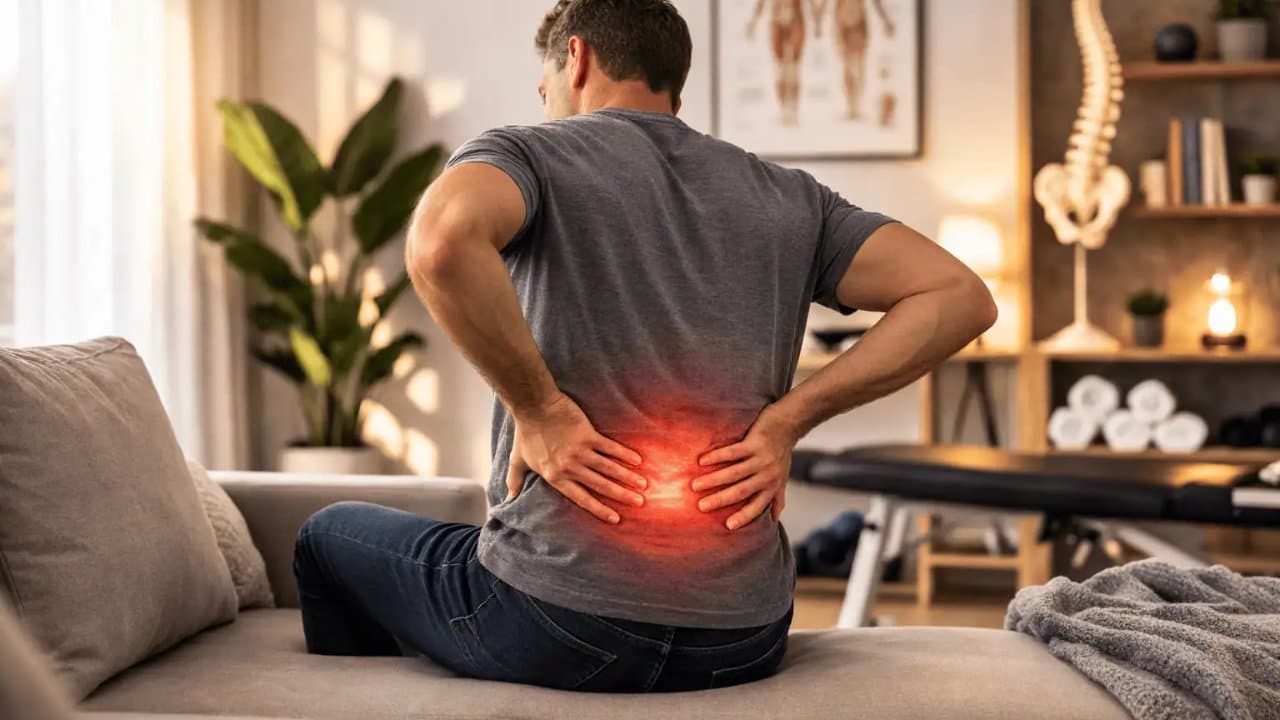
Lumbar pain remains concentrated between the last ribs and the pelvis. It increases when standing or bending and eases when you change position.
Stiffness and loss of mobility
Muscle spasm limits simple movements: tying your shoes, turning over in bed. This stiffness is more pronounced upon waking and eases with the first movements. When stepping over the bathtub rim becomes difficult, a bath lift chair, like the one designed by Sécur-O-Bain, can be a safe solution.
Pain that travels down the leg (sciatica)
When a nerve root is compressed, the pain follows the nerve pathway into the buttock, thigh, or calf. This radiation is called sciatica and is often accompanied by numbness or tingling.
Signs that need prompt medical advice
Worsening weakness in the leg, loss of sensation in the perineum, or new difficulty controlling the bladder require immediate medical attention. Back pain that appears after a fall, or that does not improve at all, should also be assessed.
| Common lumbalgia | Medical consultation |
|---|---|
| Pain concentrated in the lower back | Loss of strength or sensation in the legs |
| Morning stiffness that eases with movement | New difficulty controlling the bladder or bowels |
| Pain that varies with posture | Fever or recent infection |
| Discomfort when bending | Unexplained weight loss |
| Improvement within a few weeks | History of cancer |
| Mild radiation into the buttock | No improvement after a few days |
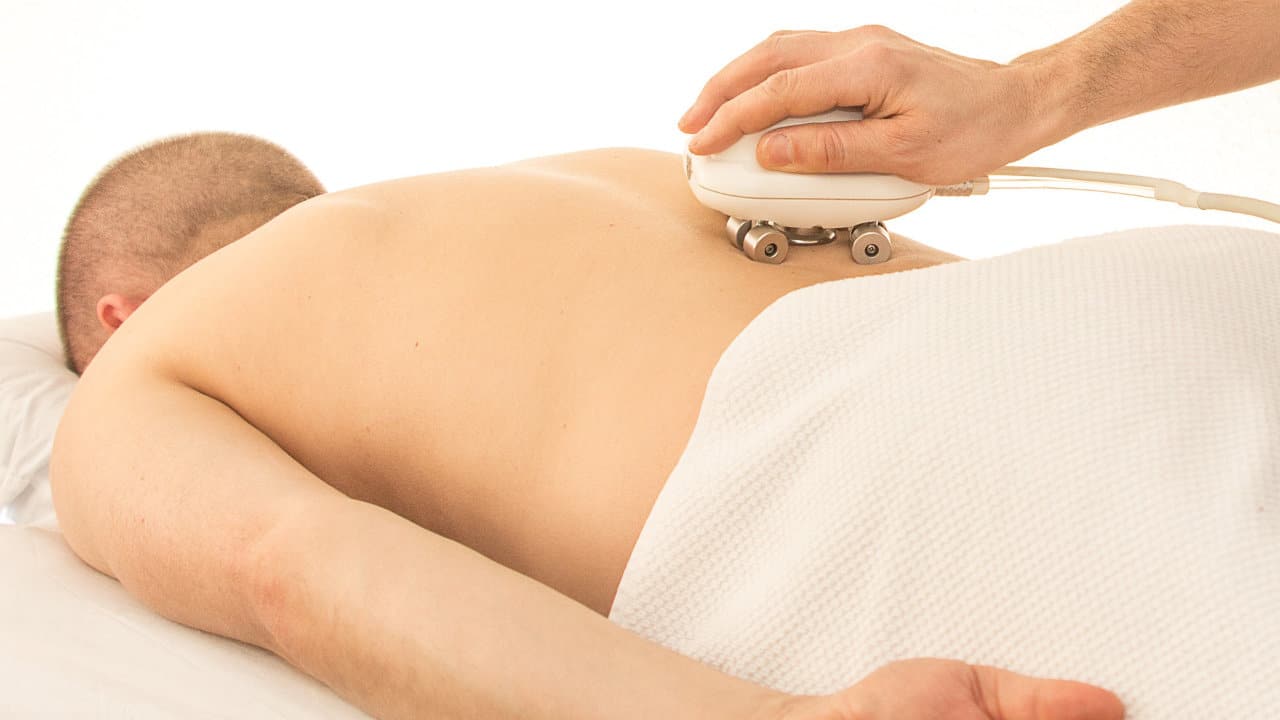
Which treatments help relieve lumbar pain?
Current recommendations favour staying active, physiotherapy, and tailored exercise. Prolonged bed rest is no longer advised.
Keep moving: the number-one recommendation
Returning to normal activities is the first recommended step. Staying in bed for more than a day leads to stiffness and weakness, even during a lumbago flare-up.
Medications and other treatments
Acetaminophen, or an anti-inflammatory, helps control lumbar pain without curing the back problem. When prescribed by your doctor, it allows you to sleep and move. Heat relaxes muscles, and a bath lift chair, like the one offered by Sécur-O-Bain, makes a hot bath accessible without having to step over the rim.
Physiotherapy and tailored exercises
The physiotherapist identifies the movements that trigger your symptoms and builds exercises accordingly. A prompt consultation is recommended from a second episode onward, or after eight weeks with no improvement.
Lifestyle habits that limit recurrences
Lower back pain often returns in episodes. Moving every day, shortening seated periods, and keeping loads close to the body reduce relapses.
| Treatment | Goal | Benefit |
|---|---|---|
| Staying active | Avoid deconditioning | Faster recovery |
| Heat, hot bath or shower | Relax muscles | Immediate relief |
| Acetaminophen or anti-inflammatory | Control pain | Sleep and resume activities |
| Physiotherapy | Target painful movements | Fewer recurrences |
| Regular exercise | Strengthen support muscles | Spine better stabilized |
| Assistive devices at home | Reduce lumbar strain | Independence preserved |
How to maintain independence despite lower back pain?
Adjust everyday movements
Raise seat heights, avoid squatting or kneeling, and keep loads at waist level. These adjustments reduce strain on the lower back without taking anything away from your routine.

The most challenging tasks at home
Standing up from a low chair, picking up an object from the floor, putting on shoes, and getting into the bathtub are the most demanding tasks. Chronic pain in general, including back pain, can turn every movement into a challenge.
Equipment that reduces strain
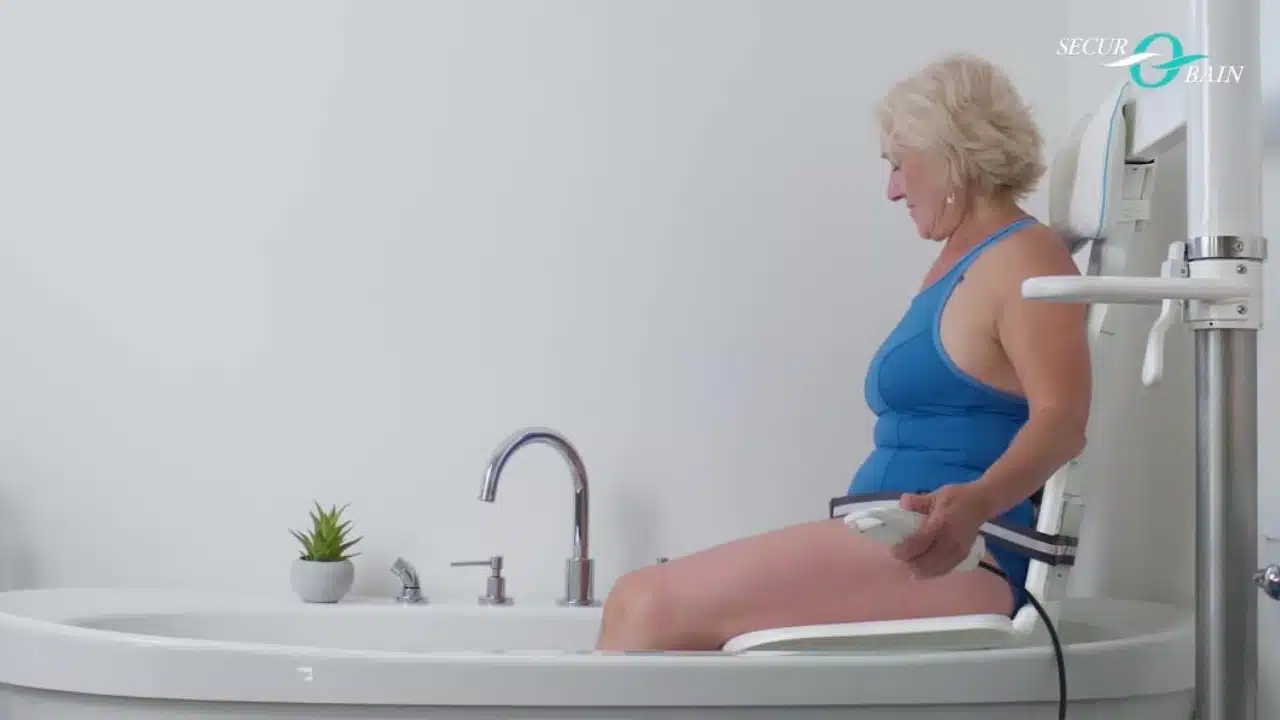
A cane or a walker lightens the load when walking. A bath lift chair, like the one offered by Sécur-O-Bain, eliminates the need to step over and lets you get in and out of the bathtub safely. You sit down and it lowers you into the water, then raises you back up. An occupational therapist can help you choose useful aids for your home.
How to reduce the risk of falling
One third of the one million seniors in Quebec who live at home fall each year. Grab bars, a non-slip mat, a bath lift chair, and balance exercises help reduce this risk.
| Difficulty encountered | Assistive device |
|---|---|
| Standing up from a low seat | Raised seat, raised toilet seat |
| Walking or standing | Cane, walker |
| Bending toward the floor | Reacher, storage at waist level |
| Getting in and out of the bath | Bath lift chair |
| Standing safely in the shower | Grab bars, non-slip mat |
| Turning taps | Lever-handle faucets |
Why is the bathroom often the most difficult room?
After the bedroom, the bathroom is the second most common place for indoor falls among people aged 60 and over, with a peak in the morning when getting up.
Movements that stress the lower back most
Leaning over the sink, rising from the toilet, and pivoting in a tight space concentrate effort on the lumbar region. A wet floor adds the risk of slipping.
Getting in and out of the tub without worsening pain
Stepping over the rim requires bearing your weight on one leg while flexing the back. This is the movement that most often flares lower back pain, and the one many people end up avoiding.
How the Sécur-O-Bain chair eases transfers
A bath lift chair, like the one offered by Sécur-O-Bain, eliminates stepping over and lets you get in and out of the bathtub safely while limiting pain. You sit at rim height, then the device gently lowers you into the water and brings you back up to the same level. A support bar, headrest, and belt help keep you in position throughout the movement.
A solution to maintain independence longer
Regaining access to a hot bath without assistance preserves both relief and intimacy. Thanks to its lift chair, Sécur-O-Bain allows you to keep bathing on your own at home for as long as possible.
| Traditional bath | With the Sécur-O-Bain chair |
|---|---|
| Stepping over the rim on one leg | Seated transfer, no stepping over |
| Back flexed and twisting | Back supported by the backrest |
| Lowering and rising with arm strength | Powered lowering and rising |
| Bracing on a wet rim | Support bar and safety belt |
| Presence of a caregiver often needed | Bath taken independently |
| Bath avoided for fear of pain | Hot bath back in the daily routine |
FAQ
What are the main causes of lower back pain?
An awkward movement, muscle strain, a herniated disc, osteoarthritis, or osteoporosis. A sedentary lifestyle, excess weight, and physical work increase the risk.
What are the symptoms of lumbalgia?
Localized lumbar pain, stiffness, and reduced mobility. The pain may go down the leg when a nerve is compressed.
How can you relieve lower back pain quickly?
Stay active, apply heat, and take acetaminophen or an anti-inflammatory if needed, according to your doctor’s advice. A hot bath relaxes tight muscles.
Should you rest when you have lumbago?
No. Staying in bed for more than a day causes stiffness and weakness, and slows recovery.
How should you take a bath when you have lumbar pain?
Avoid stepping over the rim, the movement that stresses the lower back most. A bath lift chair like the one from Sécur-O-Bain lowers you into the water in a seated position, without effort.